Train Travel in India: A Tourist's Guide to Indian Railways
How the classes work, booking on IRCTC, the foreign tourist quota, station tips, and the Indian rail routes worth taking.

On this page
For many visitors, a rail journey is one of the most memorable parts of a trip — chai passing down the carriage, the countryside sliding by, a slice of everyday India you don't see any other way. But train travel in India can look bewildering from the outside, with its tangle of classes, quotas and booking rules. Once you understand the basics, it's one of the best-value and most rewarding ways to get around.
Quick answer: Indian Railways is safe, cheap and extensive. Book reserved air-conditioned classes (1AC, 2AC, 3AC or chair car) in advance through IRCTC, ideally using the foreign tourist quota or booking as soon as the window opens 60 days out. Fast trains like the Vande Bharat and Shatabdi are ideal for tourist routes such as Delhi–Agra. Arrive early, keep your booking on your phone, and watch your bags.
Understanding the Classes
The single most useful thing to learn is the class system, because it determines your comfort and price. Here are the ones tourists actually use:
| Class | What it is | Best for |
|---|---|---|
| 1AC (First Class AC) | Private 2- or 4-berth cabins | Overnight comfort, privacy |
| 2AC (Second AC) | Open berths, curtained bays of four | Overnight journeys, good value |
| 3AC (Third AC) | Open berths, bays of six | Budget overnight travel |
| CC (AC Chair Car) | Airline-style seats | Daytime intercity trips |
| EC (Executive Chair Car) | Wider seats, premium day travel | Fast daytime routes |
For a daytime hop like Delhi to Agra, a chair car (CC or EC) on a fast train is perfect. For longer overnight journeys, 2AC hits the sweet spot of comfort and cost. Non-AC sleeper class is cheaper still but hotter and busier — fine for the adventurous, less so if you value sleep. For how rail compares with a private car on the classic circuit, see Golden Triangle by train or car.
Booking Tickets: IRCTC and the Tourist Quota
Almost all reserved tickets are sold through IRCTC, the railways' official booking system. Two quirks are worth knowing:
- The general booking window opens 60 days ahead of travel, and popular trains sell out fast — so book early.
- There's a Foreign Tourist Quota (FTQ) on many key trains, a small block of seats reserved for overseas visitors even when general booking is full. It's a genuine lifesaver on busy routes and can be booked with your passport.
Registering on IRCTC as a foreigner used to be fiddly, so many travellers book through a reputable agent or a well-known third-party app instead — our best travel apps for India guide lists the ones that work smoothly. Whichever route you take, book reserved seats; unreserved carriages are standing-room chaos and not for a first-timer with luggage.
If the train is full or the timing doesn't work, remember it's only one of your options — our getting around India overview and domestic flights in India guide cover the alternatives.
The Trains Worth Taking
Some services are a cut above and ideal for tourists:
- Vande Bharat Express — India's sleek, modern semi-high-speed trains, now on many key corridors. Fast, clean and comfortable.
- Shatabdi Express — fast daytime intercity trains with chair-car comfort and meals included; excellent for city-to-city hops.
- Gatimaan Express — the quick Delhi–Agra service, a favourite for day trips to the Taj (see Delhi to Agra travel options).
- Rajdhani Express — premium overnight trains linking Delhi with major cities, with meals included.
These premium trains take a lot of the uncertainty out of rail travel — reliable timings, cleaner carriages, and staff used to helping visitors.
At the Station: Practical Tips
Indian stations are busy, characterful places, and a little preparation makes them easy:
- Arrive 30–45 minutes early. Finding your platform, coach and berth takes time in a big station.
- Check the coach position display on the platform, and note your coach (e.g. A1, B2) and berth number from your ticket.
- Keep your booking on your phone, plus a screenshot in case of no signal. A printout is a useful backup.
- Mind your bags on platforms and while sleeping — a cheap cable lock for your case under the berth is reassuring on overnight trains.
- Bring water, snacks and hand sanitiser, though AC classes serve tea and meals on many routes.
Basic caution keeps you comfortable rather than caught out; our common scams in India and how to avoid them guide flags the station-specific ones, like strangers claiming your train is cancelled to redirect you.
Is the Train Right for Your Trip?
Trains are wonderful, but they're not always the best tool. They shine on scenic medium-distance legs and overnight journeys where you save a hotel night. For very long distances, a domestic flight usually wins on time; for flexible multi-city touring with stops on your schedule, a car with a driver is often more relaxing — see hiring a driver in India.
On our small-group trips we choose the mode that fits each leg, so you get the romance of the rails where it counts without the booking headaches anywhere. Our [Soul of India: Golden Triangle Cultural Tour, 16–23 September 2026](/destinations/beyond-taj-sep-2026) blends comfortable road travel with the right rail moments, all arranged for you — hosted personally by Anna, capped at 12 travellers and priced at $999 in USD for international guests.
Frequently Asked Questions
How do tourists book train tickets in India?
Most reserved tickets are booked through IRCTC, the official system, with the window opening 60 days before travel. Foreign visitors can use the Foreign Tourist Quota with a passport, or book through a reputable agent or travel app if registering directly proves fiddly.
What is the best train class for tourists in India?
For daytime journeys, AC Chair Car (CC) or Executive Chair Car (EC) on a fast train is ideal. For overnight trips, 2AC offers the best balance of comfort, privacy and value, while 1AC gives you a private cabin.
Is train travel in India safe for tourists?
Yes. Reserved AC classes are safe and used by millions daily. Keep your belongings secure, especially on overnight journeys, book reserved rather than unreserved seats, and stay alert to common station scams.
Which is better in India, train or flight?
Trains win on cost, scenery and short-to-medium distances, and overnight services save a hotel night. Flights win on very long distances where time matters most. Many good itineraries use both, matching the mode to each leg.
Ready to Ride Without the Booking Battle?
If decoding IRCTC and chasing the tourist quota isn't how you want to spend your trip planning, our [Soul of India: Golden Triangle Cultural Tour, 16–23 September 2026](/destinations/beyond-taj-sep-2026) takes care of every journey — a small group hosted by Anna, capped at 12 travellers and priced in USD for international travellers. See how a hosted trip compares in are small group tours worth it, and browse every upcoming date on our destinations page.
Keep reading
More guides to help you plan the same trip.
Is India Safe for Tourists? A 2026 Reality Check
Wondering is India safe to travel in 2026? Here's an honest, specific breakdown of what to expect, what to watch for, and how to travel smart.
Best SIM Card & eSIM for India in 2026 (Tourist Guide)
Which tourist SIM or eSIM to buy for India, where to get it at the airport, what it costs, and which network actually works outside the cities.

Money & Tipping in India: A Tourist's Guide
A practical guide to cash, cards, and tipping in India so you know exactly who to pay, how much, and when.
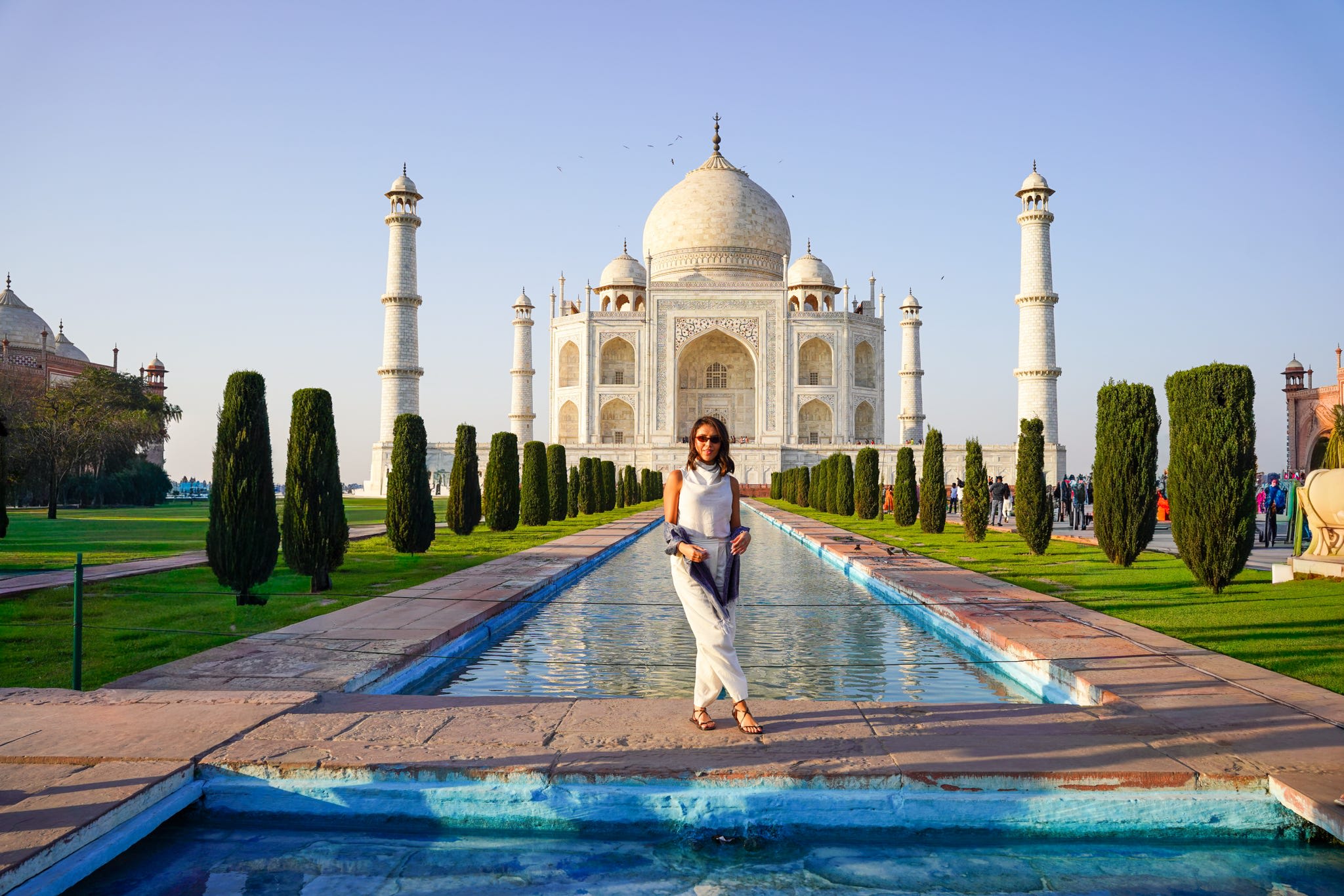
Delhi to Agra: Train, Car or Tour? An Honest Comparison
Delhi to Agra is about 233 km. Real journey times for the Gatimaan, Vande Bharat, expressway car and bus — and which one suits your trip.
Golden Triangle by Train or Car: Which Is Better?
Deciding golden triangle by train or car? Here's an honest comparison of comfort, cost, and time for Delhi, Agra, and Jaipur.
Currency, ATMs & Exchanging Money in India
Everything on currency exchange in India for visitors — using ATMs, whether to bring cash, avoiding poor rates, and how much to carry day to day.