India for European Travellers: What to Know
A first-trip primer for European travellers: the e-Visa, flights from major EU hubs, the time difference, health, money and etiquette.
On this page
Europe is superbly placed for India — well-connected hubs, a manageable time difference, and only a modest jet-lag hit compared with travellers coming from North America. This primer for India for European travellers brings the essentials together: how the e-Visa works, which routes make sense from the main EU airports, and the everyday practicalities that smooth out a first visit. Because "European" covers many passports, we flag where your specific country's rules matter.
Quick answer: Most European nationals need an e-Visa, applied for online in advance. Flights from major EU hubs to Delhi or Mumbai run around 8–10 hours nonstop, the time difference is a gentle 3.5–4.5 hours, and October to March is the best window. Bring a universal adapter, comprehensive insurance, and some cash for daily use.
India at a Glance for European Travellers
| Detail | What to know |
|---|---|
| Visa | e-Visa for most EU nationals; check your passport |
| Flight time | ~8–10 hours nonstop from major EU hubs |
| Time difference | India is 3.5–4.5 hours ahead of Central Europe |
| Plugs | Types C, D and M at 230V; adapter needed for D/M |
| Currency | Indian rupee (INR); keep some cash daily |
| Best months | October to March |
October to March offers the kindest weather and the most comfortable sightseeing across the country.
Visas: Check Your Specific Passport
India's e-Visa scheme covers most European nationalities, but the exact eligibility and any embassy requirements depend on your country, so confirm for your own passport rather than assuming. The process is done online and is generally smooth. Our India e-Visa guide explains the current steps, timing, and the photo and passport-scan requirements that catch people out. Apply a week or two ahead and carry your approval saved offline.
Flying from Europe
The continent's big hubs connect well to India:
- Nonstops from Frankfurt, Paris, Amsterdam, London, and others reach Delhi and Mumbai in roughly 8–10 hours.
- One-stop routings via the Gulf (Dubai, Doha, Abu Dhabi) or Istanbul are often cheaper and open up smaller departure cities.
- From southern and eastern Europe, a single connection is usually the norm.
Our flights from Europe to India guide covers routes and booking windows. The best news for Europeans is the time difference: at just 3.5–4.5 hours ahead of Central European Time, jet lag is mild, and most travellers feel fine after one good night's sleep.
Health and Insurance
- Vaccinations. Check recommended jabs early — some require multiple doses. See vaccinations for India.
- Insurance. Your European Health Insurance Card does not apply outside Europe, so arrange comprehensive travel cover including medical evacuation; our India travel insurance guide explains what to look for.
- Everyday health. Simple habits prevent most stomach trouble — eat freshly cooked food from busy places and drink only bottled or filtered water.
Money, Plugs and Connectivity
- Money. Cards work well in cities; keep rupees for markets, tips, and rural stops. Currency and ATMs in India covers withdrawing sensibly, and euros are easy to exchange.
- Plugs. India uses 230V, the same as continental Europe, so your devices are fine — but you'll need an adapter for the type D and M sockets. See power plugs and adapters for India.
- Connectivity. A local SIM or eSIM is inexpensive and worth sorting on arrival; best SIM card for India compares options.
Cultural Footing
A little awareness of local norms is welcomed everywhere you go:
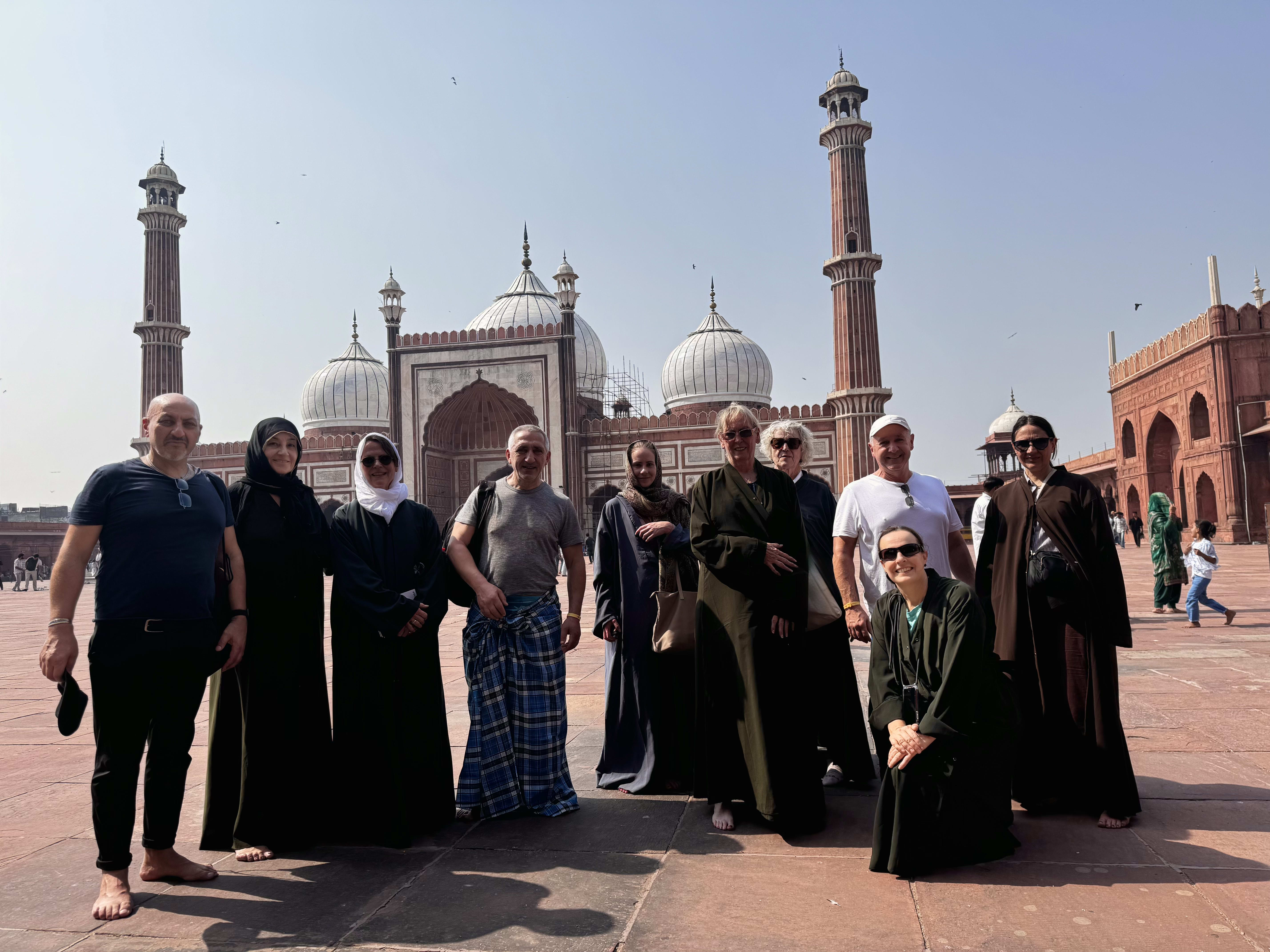
- Dress modestly, especially at temples and in smaller towns.
- Remove shoes at temples and many homes.
- Use your right hand for eating and passing items.
- Bargaining is normal in markets but not in fixed-price shops.
Our India etiquette dos and don'ts is worth a read before you fly.
How Long to Go and Where to Start
Europeans often have more generous holiday allowances than travellers elsewhere, which is a real advantage — India rewards time. For a first visit, the classic North India loop is the natural starting point:
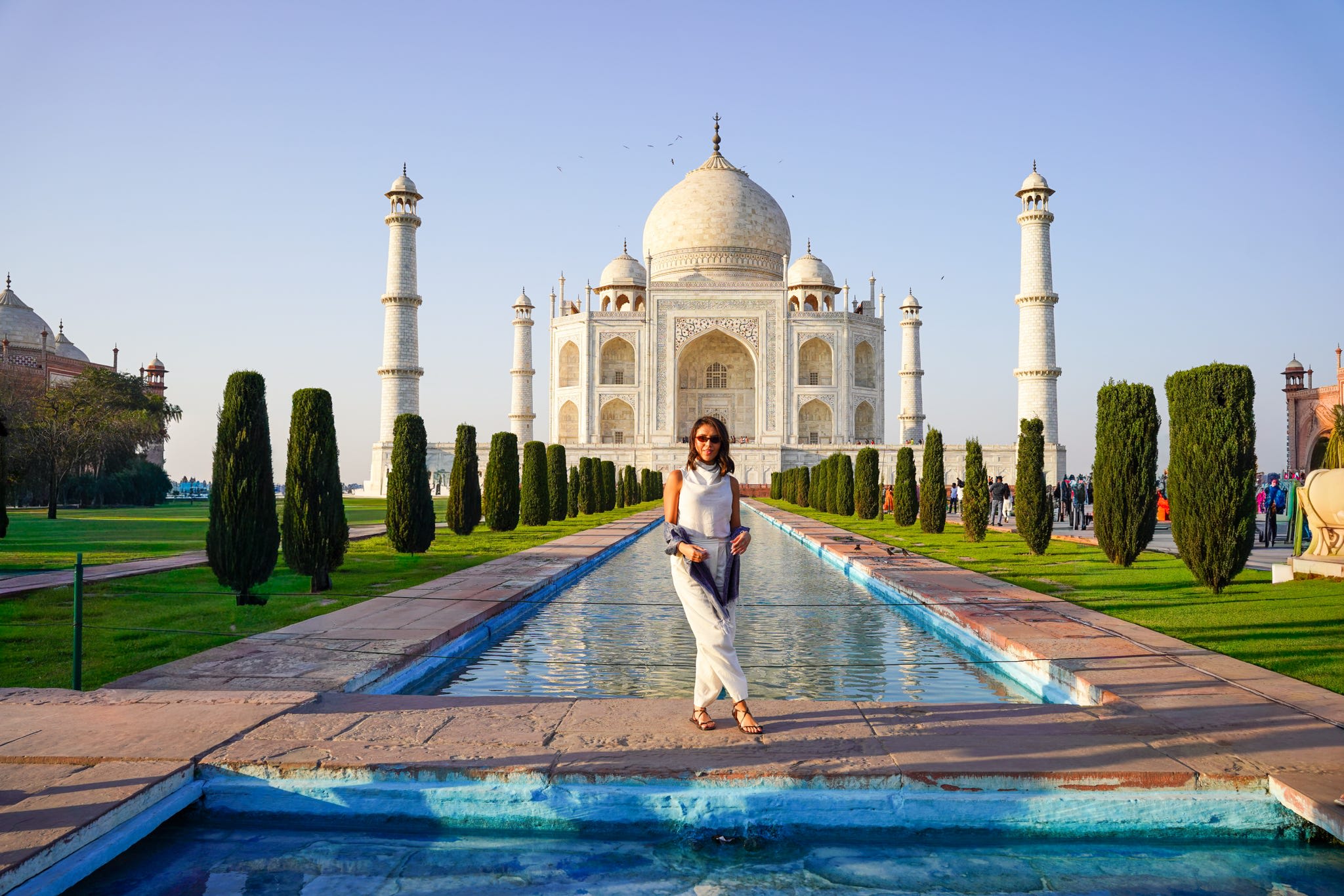
- One week: the Golden Triangle of Delhi, Agra, and Jaipur is the perfect taster — see our one week in India itinerary.
- Ten days to two weeks: add Udaipur, the Kerala backwaters, or a few days on the coast — our two weeks in India itinerary maps out the options.
- Longer: with three weeks you can pair North and South at a genuinely relaxed pace.
If you're routing via a Gulf hub, a short stopover in Dubai or Doha on the way home is easy to add and breaks up the journey.
The Easiest Way to Do a First Trip
If arranging all of this yourself feels like a lot for a first visit, a hosted small-group trip removes nearly all the friction. Our [Soul of India: Golden Triangle Cultural Tour, 16–23 September 2026](/destinations/beyond-taj-sep-2026) takes you deep into Delhi, Agra, and Jaipur with a cultural focus — airport pickups, hotels, and a gentle first day all handled — as a small group hosted personally by Anna, capped at 12 travellers, and priced at $999 in USD for international guests. You arrive to a plan instead of a to-do list.
Frequently Asked Questions
Do European citizens need a visa for India?
Most European nationals need an e-Visa, applied for online before travel. Eligibility varies slightly by passport, so confirm for your own country. Carry your approval saved offline and apply a week or two ahead.
How long is the flight from Europe to India?
Nonstops from major hubs such as Frankfurt, Paris, and Amsterdam reach Delhi or Mumbai in around 8–10 hours. One-stop routings via the Gulf or Istanbul take longer but are often cheaper.
What is the time difference between Europe and India?
India is roughly 3.5–4.5 hours ahead of Central European Time, depending on daylight saving. Because the gap is small, jet lag is usually mild for European travellers.
Is India safe for European tourists?
India is generally safe for visitors who take sensible precautions with valuables, dress respectfully, and use reputable transport. First-timers often feel most comfortable on a hosted trip where the local logistics are managed.
Ready to Travel With Everything Handled?
If you'd rather focus on the experience than the arrangements, our [Soul of India: Golden Triangle Cultural Tour, 16–23 September 2026](/destinations/beyond-taj-sep-2026) is our next culturally focused departure — a small group hosted by Anna, priced in USD for international travellers. See other dates and routes on our destinations page.
Keep reading
More guides to help you plan the same trip.
India for American Travellers: The Complete Primer
A first-trip primer for Americans: the e-Visa, best routes from the US, the time difference, jabs, money and cultural basics in one place.
India for British Travellers: The Complete Primer
What UK travellers need before a first trip to India: visas, flights from Britain, jabs, money, plugs and the cultural basics.

Flights from Europe to India: Best Routes & Airlines 2026
Which European cities have nonstop flights to India, the best airlines and hubs, when to book, and how to arrive ready to travel.
India e-Visa for UK Citizens: Step-by-Step
A step-by-step guide to the India visa for UK citizens — which e-Visa to pick, how to apply on the official portal, fees, timing and the mistakes to avoid.
India e-Visa for US Citizens: Step-by-Step
A step-by-step guide to the India e-Visa for US citizens: which type to choose, how to apply, costs, timing and the common mistakes.
Your First Trip to India: What to Really Expect
A warm, honest guide to what to expect on your first trip to India — the arrival, the surprises, the real challenges, and how to enjoy it from day one.