
Old Delhi Walking Tour: Chandni Chowk & Beyond
A first-timer's guide to an old Delhi walking tour through Chandni Chowk, its food lanes, mosques and havelis.
On this page
An old Delhi walking tour is, hands down, the fastest way to understand India before you've even left the capital: sensory overload, unbelievable food, and 17th-century chaos that somehow still works. This guide covers the route we actually walk, what to skip when it's too hot, and how to do it without getting lost or overwhelmed. If you're building out a longer Delhi stop, pair this with our one-day in Delhi itinerary or the fuller things to do in Delhi guide.
Quick answer: Start at Fatehpuri Masjid or the Red Fort, walk Chandni Chowk's main spine east to west (or reverse), detour into 2-3 side lanes for food and havelis, and finish at Jama Masjid — allow 3-4 hours, go early morning, and don't rush the food stops.
Why Chandni Chowk Is the Heart of This Walk
Chandni Chowk was built in the 1650s as the Mughal empire's grandest market street, laid out by Emperor Shah Jahan's daughter Jahanara. Today it's still Delhi's busiest wholesale and retail district — spice traders, wedding card printers, jewellers, and sari shops packed into lanes barely wide enough for two people to pass. It's loud, it smells incredible, and it rewards slow walking over any attempt to "see everything."
- The main street runs roughly 1.5km from Fatehpuri Masjid to the Red Fort
- Side lanes (Paranthe Wali Gali, Kinari Bazaar, Dariba Kalan) are where the real texture is
- Traffic is banned on parts of the main road during the day, which helps
The Route We Walk
- 1Red Fort (Lal Qila) — start here if you want the Mughal history first; it's the most photogenic bookend
- 2Chandni Chowk main road — walk west, weaving in and out rather than staying on the main drag the whole time
- 3Paranthe Wali Gali — a single lane of parantha shops running since the 1870s; go hungry
- 4Kinari Bazaar — wedding decorations, tinsel, and trims; a proper sensory jolt of colour
- 5Gurudwara Sis Ganj Sahib — a working Sikh temple, free community kitchen (langar), cover your head and remove shoes
- 6Jama Masjid — India's largest mosque, finish here around sunset for the light on the sandstone courtyard
We usually do this over 3-4 hours including food stops, not counting a rest break in the middle of the day when it gets punishingly hot from April to June.
What to Eat Along the Way
This is arguably the best reason to do the walk at all.
- Paranthe Wali Gali — stuffed fried breads (try the classic aloo or the more unusual banana-stuffed version)
- Jalebi Wala near the Central Baptist Church corner — hot jalebis fried in ghee, going since 1884
- Karim's near Jama Masjid — Mughlai kebabs and curries, a Delhi institution since 1913
- Chaina Ram — sweets and namkeen, an alternative if Jalebi Wala has a queue
If you're anxious about street food safety, our guide on street food safe to eat in India has practical rules of thumb — freshly fried, high turnover, and busy stalls are generally the safer bets.
Practical Tips for Doing This Comfortably
- Go early — 7-9am is cooler, quieter, and the light is better for photos
- Dress modestly — shoulders and knees covered, especially near the mosque and gurudwara
- Wear closed shoes you don't mind getting dirty — lanes are uneven and can be wet from washing down stalls
- Carry small notes — most vendors can't break large bills
- Skip the cycle rickshaw hard-sell if you'd rather just walk — it's persistent but easy to wave off
- Midday summer heat (April-June) is genuinely tough — if you're visiting then, do this walk at dawn or push it to late afternoon instead
Is It Safe, and Should You Go Alone?
Old Delhi is generally safe to walk in daylight hours, including for solo travellers, though the crowds and narrow lanes take some getting used to on a first visit. Keep bags zipped and in front of you, and don't wear expensive jewellery. If you'd rather not navigate the lanes solo on your first India trip, this is exactly the kind of walk that works better with a local guide who knows which turns lead somewhere interesting — it's one of the stops built into our Golden Triangle Diwali & Yoga trip (11 days, from $1,299), where Anna walks the group through with a local guide rather than leaving anyone to guess at the map.
Frequently Asked Questions
How long does an old Delhi walking tour take?
Plan for 3-4 hours if you include food stops and a visit inside Jama Masjid. You can compress it to 90 minutes if you just walk the main street without detours, but you'll miss most of what makes it worthwhile.
Is Chandni Chowk safe for tourists?
Yes, it's safe in daylight with normal city precautions — watch your bag, stay aware in crowds, and cross the main road carefully since traffic rules are more of a suggestion here. Evenings after dark are best avoided for first-time visitors unfamiliar with the lanes.
Do I need a guide for an old Delhi walking tour?
You don't strictly need one, but a local guide makes a real difference in a place this dense — knowing which lane leads to what, and being able to order food and navigate crowds confidently. It's a highlight on our small-group Golden Triangle trips for exactly that reason.
What should I wear for walking around Old Delhi?
Loose, breathable clothing that covers shoulders and knees, closed comfortable shoes, and a scarf or hat for sun protection. See our full what to wear in India guide for more detail by season and city.
Ready to Walk Old Delhi With a Local Guide?
If you'd rather explore Chandni Chowk and Jama Masjid with someone who actually knows the lanes — instead of squinting at a phone map in 40°C (104°F) heat — join us on the Golden Triangle Diwali & Yoga trip, a small group of up to 12 hosted personally by Anna. Browse all our upcoming small-group India trips to see what else is on the calendar.
Keep reading
More guides to help you plan the same trip.

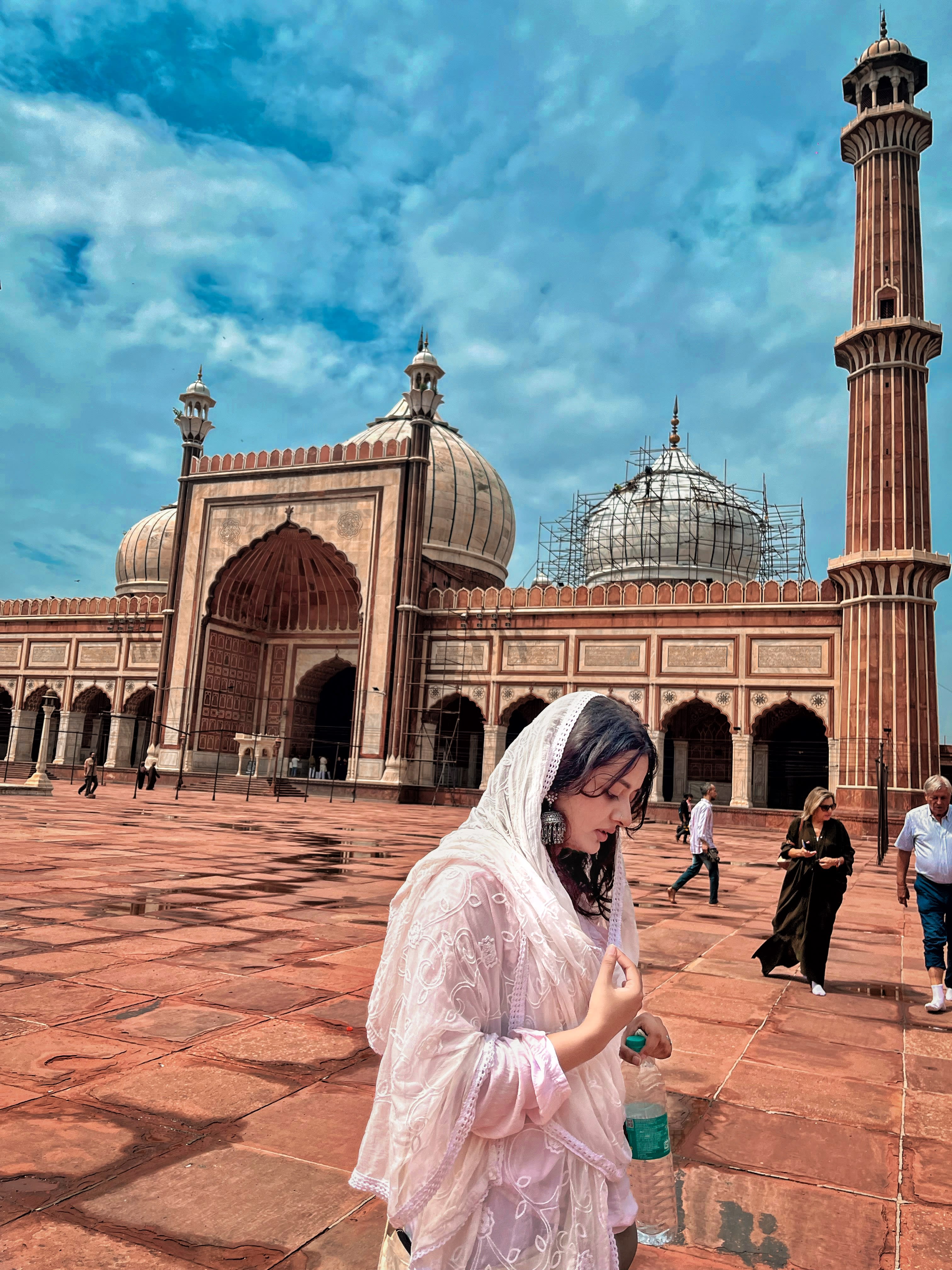
One Day in Delhi: The Perfect Itinerary
The perfect one day in Delhi itinerary, covering Old and New Delhi with honest timing, food stops, and transport tips for first-timers.
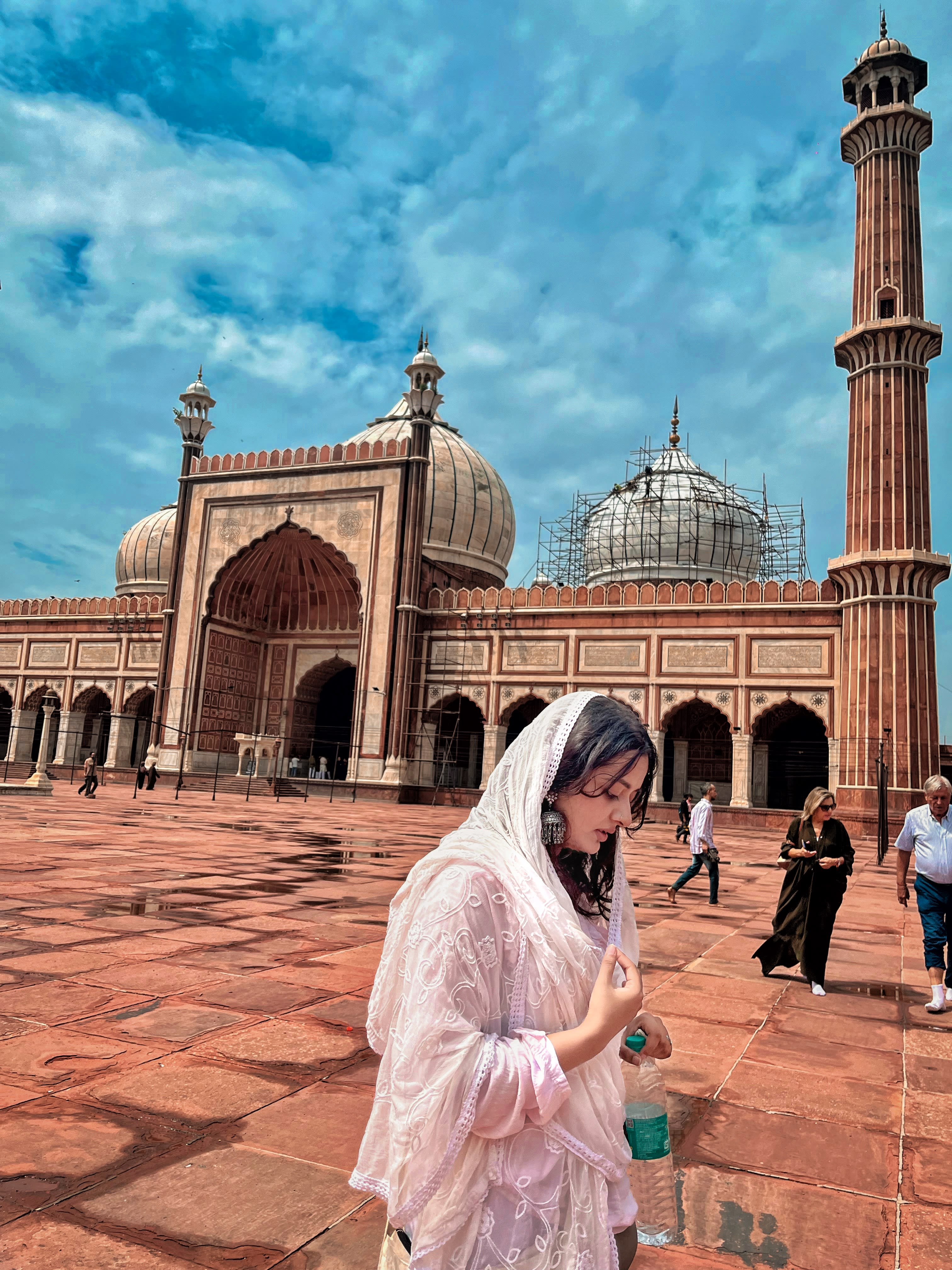
Things to Do in Delhi: A First-Timer's Guide
From the lanes of Old Delhi to the Mughal tombs and boulevards of New Delhi — the experiences worth your time, and how to plan them.
How to Avoid Getting Sick in India (Delhi Belly)
Practical, honest advice to avoid getting sick in India, from water and street food rules to what to pack for Delhi belly.

Mumbai Travel Guide for First-Time Visitors
Mumbai for US, UK and Europe travellers: the big sights, colonial architecture, street food, safety, and how many days you need.
Barot Valley Travel Guide: Himachal Off the Beaten Path
Barot Valley, Himachal: trout fishing, the hydel canal walk, where to stay, and how to plan a quiet weekend away from the Manali crowds.
Bir Billing Travel Guide: India's Paragliding Capital
Bir Billing, Himachal: paragliding, tea gardens, Tibetan monasteries, the best cafes, and how to plan the trip from Delhi.